About A New Page
Story is how children learn. Science is how they learn to read.
A New Page brings the two together. Real stories your child cannot wait to finish, built the proven way reading specialists teach. Fifteen minutes a night, side by side, for ages 3 to 18.
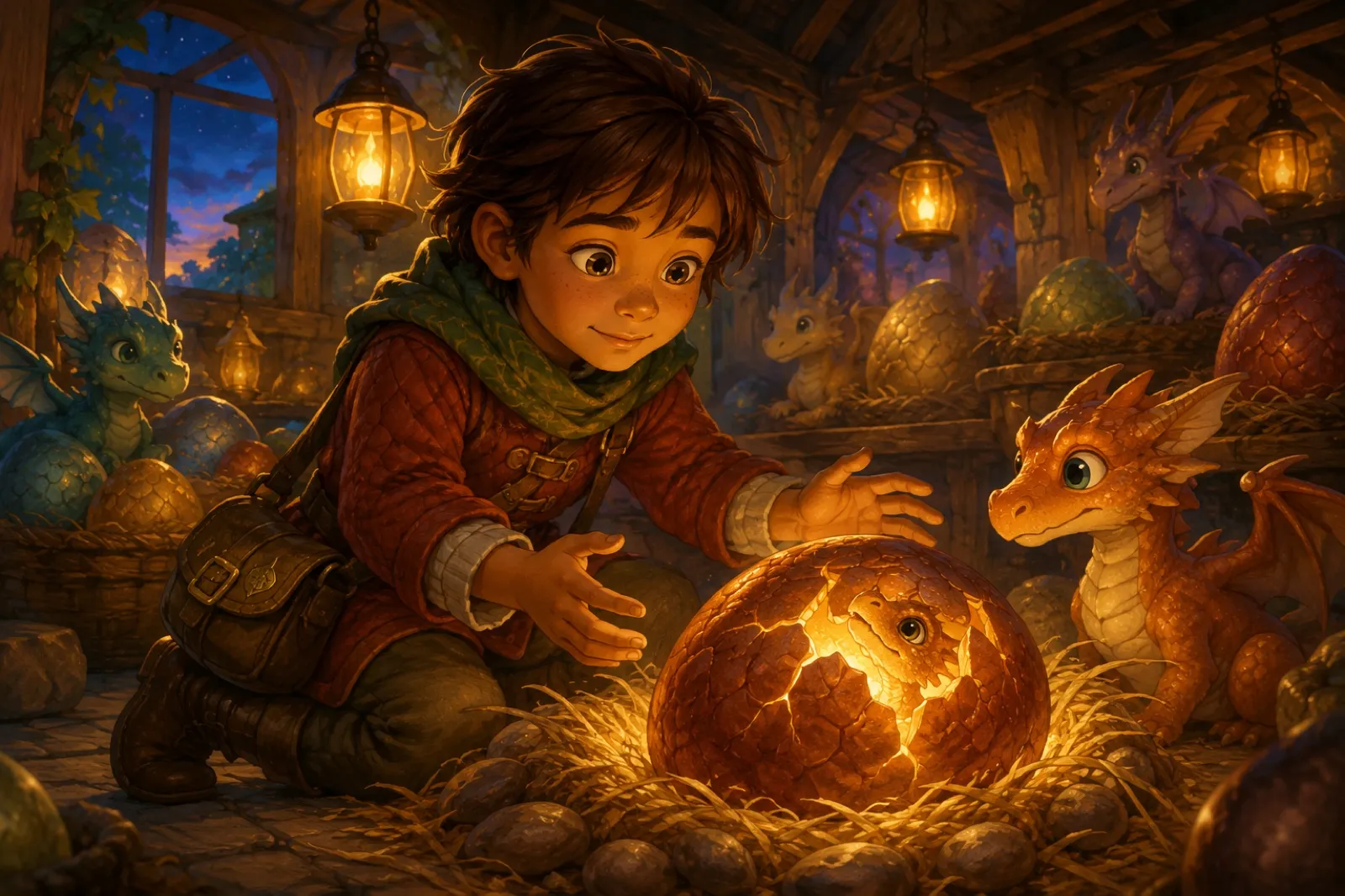
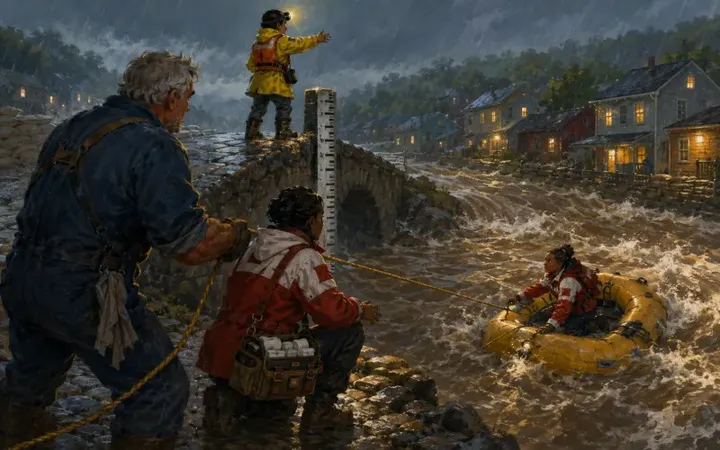
Art: Emberwing, one of our story worlds
What we believe
Story moves a child. Drills and games rarely do.
Story is how children make sense of the world, and how all of us remember what matters. A drill can keep a child busy. A story makes a child need to know what happens next. We believe story, paired with the science of reading, is the best way to teach a child to read.

Stories stick
Across more than 33,000 people in more than 75 study samples, stories were understood and remembered better than plain explanations.
Mar, Li, Nguyen and Ta, 2021, Psychonomic Bulletin and Review
The mind treats story as special
Cognitive scientists call stories “psychologically privileged”: easier to understand and easier to remember. Even preschoolers grasp how a story works.
Willingham, 2004, American Educator
A child carried by a story keeps going
Being swept into a story is something psychologists can measure. And engaged, motivated readers read more, which is how reading grows.
Green and Brock, 2000; Guthrie and Wigfield, 2000
The stories
Your child picks the world. Then your child becomes the hero.
Dragons, rescue crews, lost cities, the stars. Every world is a real story with real stakes, and the hero’s lines are written for your child to read.






Ages 3 to 18
From first sounds to chapter books
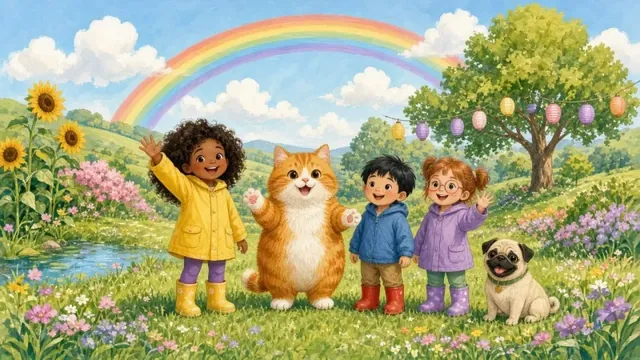
 Ages 3 to 4The Littles. Play Time with Nan the cat: sound play, two new letters a week, and a book read aloud together.Meet the Littles
 Ages 5 to 10Story worlds where you read the story and your child reads the hero’s lines.See ages 5 to 10
 Ages 11 to 18Older worlds with older stakes. Teens can read on their own, and the choice is theirs each night.See ages 11 to 18
The science
A story alone does not teach reading. Science does.
Children who find reading hard, including children with dyslexia, learn best with Structured Literacy: sounds and spellings taught directly, in order, each step built on the last. It is the approach the International Dyslexia Association recommends, and every A New Page lesson is built on it.
One sound at a time, in a proven order
Our lesson order follows UFLI Foundations from the University of Florida Literacy Institute, a university-developed program with published research behind it. Our approach is Orton-based, built on the same principles as Orton-Gillingham.
National Reading Panel, 2000; International Dyslexia Association, Structured Literacy
Every line your child reads, they can read
Each hero line is built only from sounds your child has already been taught. There is nothing to guess, so they sound it out, and sounding out is how a word becomes one they know on sight.
Ehri, 2014, orthographic mapping; Scarborough, 2001, the Reading Rope
At the trailhead stood a little wooden box on a post. Inside lived the trail register, where hikers write their names. Sal shone his light on it. “Names, times, where they went. Young eyes, cadet. Read.”
Your child readsThe two went in. The two did not get out.
Two names went in at nine this morning, and no names came back out!
From Rescue One, Episode 2. The hero line grows as your child does.
Practice that makes it stick
A missed word comes back on later nights, further apart each time, until it is easy. Your child moves on only when a step is solid: nine out of ten right across the last two reading nights.
Dunlosky and colleagues, 2013, on spaced and retrieval practice; Castles, Rastle and Nation, 2018
We build on the published work of reading scientists such as Linnea Ehri, Hollis Scarborough, Louisa Moats, David Kilpatrick and Sally and Bennett Shaywitz. We do not claim they endorse us. We did our homework. And we measure every child the way a reading specialist would, with our method published before the results. See the full science
Where story and science meet
Reading is two halves, woven together
The Reading Rope
Skilled reading is woven from two bundles of strands: understanding language, and recognizing words. Stories grow the first. Lessons build the second. A New Page gives your child both, every night.
How a word sticks
A child hears the sounds in “ship,” links each one to its letters, and the word is stored for good. That is how sounding out becomes reading on sight.
The people
A reading specialist and a storyteller, side by side

41years teaching children to read
She began as a middle school language arts teacher, became a reading specialist, and finished her career teaching second grade. She trained in the Spalding Method, a direct line from Dr. Samuel Orton’s original work. She helped set this program’s teaching standards and reviews its reading science.
For years, she read chapter books aloud to her second graders from a green chair. It is the whole idea behind A New Page: a voice a child loves, and a story worth reading.

Joel N. Clark Founder
Bestselling author. Co-author, with Mark Batterson, of the Jack Staples trilogy for young readers, and lead producer and director at A Family Story Films. He leads the story craft behind every world your child reads in.
Reading therapists In the field
Reading therapists around the country are using A New Page with children in small groups, testing it live and sending notes and ideas that help shape it.
How a night works
Fifteen minutes. You read the story. Your child reads the hero’s lines.
- Warm upA few quick sounds and words, out loud.
- Learn one new thingOne sound or rule, taught from a script written for you, word for word. No teaching background needed.
- Read the story togetherYou read the narration. Your child reads the hero’s lines, every one decodable.
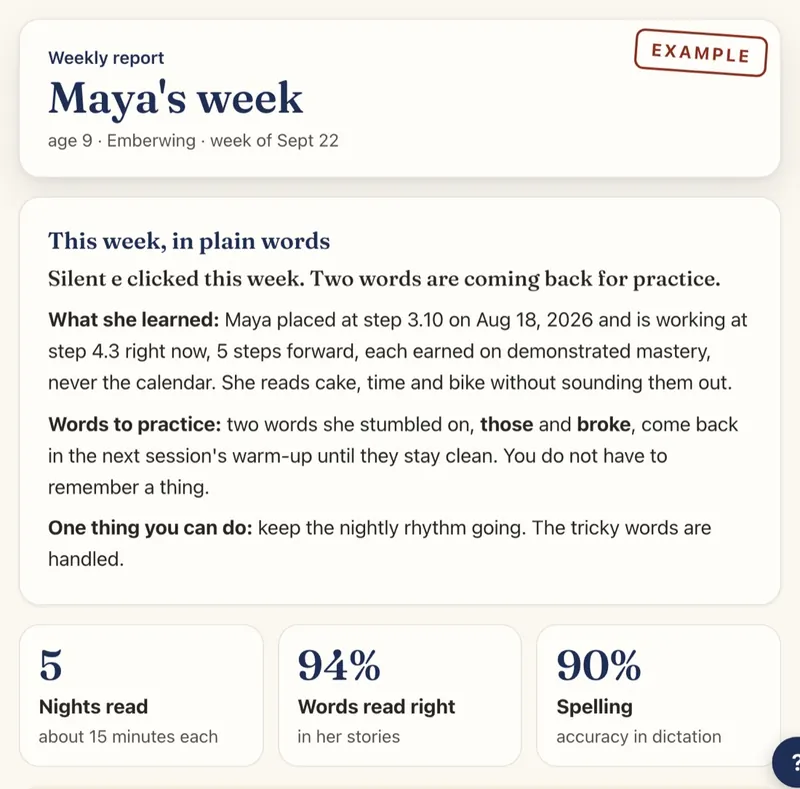
Each week you get a plain report: what they learned, which words are still in practice, and how their reading is growing.
Ages 3 and 4 start with Play Time in the Littles: sound play and a book read aloud together, no reading check needed. Reading aloud together is one of the best-studied habits in early literacy (Bus, van IJzendoorn and Pellegrini, 1995).
No microphone and no recording. Your child’s name never leaves your device.
Why we built it
We saw it firsthand. Drills and games did not move a child we love. Story did. So we paired story with the best reading science we could find, and built it for every family who needs it.
Sources
- Bus, A. G., van IJzendoorn, M. H., and Pellegrini, A. D. (1995). Joint book reading makes for success in learning to read: A meta-analysis on intergenerational transmission of literacy. Review of Educational Research, 65(1), 1 to 21.
- Castles, A., Rastle, K., and Nation, K. (2018). Ending the reading wars: Reading acquisition from novice to expert. Psychological Science in the Public Interest, 19(1), 5 to 51.
- Dunlosky, J., Rawson, K. A., Marsh, E. J., Nathan, M. J., and Willingham, D. T. (2013). Improving students’ learning with effective learning techniques. Psychological Science in the Public Interest, 14(1), 4 to 58.
- Ehri, L. C. (2014). Orthographic mapping in the acquisition of sight word reading, spelling memory, and vocabulary learning. Scientific Studies of Reading, 18(1), 5 to 21.
- Green, M. C., and Brock, T. C. (2000). The role of transportation in the persuasiveness of public narratives. Journal of Personality and Social Psychology, 79(5), 701 to 721.
- Guthrie, J. T., and Wigfield, A. (2000). Engagement and motivation in reading. In M. L. Kamil and others (Eds.), Handbook of Reading Research, Vol. 3, 403 to 422.
- International Dyslexia Association. Structured Literacy: Effective instruction for students with dyslexia and related reading difficulties.
- Mar, R. A., Li, J., Nguyen, A. T. P., and Ta, C. P. (2021). Memory and comprehension of narrative versus expository texts: A meta-analysis. Psychonomic Bulletin and Review, 28, 732 to 749.
- National Reading Panel (2000). Teaching Children to Read. National Institute of Child Health and Human Development.
- Scarborough, H. S. (2001). Connecting early language and literacy to later reading (dis)abilities. In S. Neuman and D. Dickinson (Eds.), Handbook of Early Literacy Research.
- University of Florida Literacy Institute. UFLI Foundations.
- Willingham, D. T. (2004). Ask the cognitive scientist: The privileged status of story. American Educator, 28(2).

Find the level your child is ready for.
Start the free reading checkAbout 10 minutes. No account. Ages 3 and 4 start with Play Time.